Is Endoscopy Painful? What to Expect During an EGD
If your doctor recommends an upper endoscopy, you may have one big question: Is endoscopy painful?
For most people, an upper endoscopy isn’t painful. Sedation is commonly used to keep you relaxed and comfortable during the procedure. You may have a mild sore throat, bloating, or other minor discomfort afterward, but these symptoms usually don’t last long.
Knowing what happens during an endoscopy can make the procedure feel a little less intimidating.
What Is an Upper Endoscopy?
An upper endoscopy lets your gastroenterologist look at the inside of your upper digestive tract. It’s also called an upper GI endoscopy or EGD.
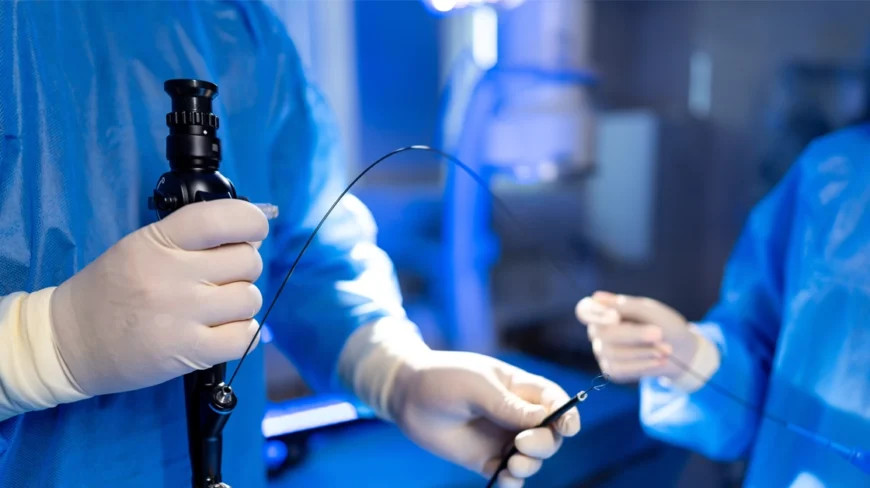
Your doctor uses a thin, flexible tube called an endoscope. A small camera and light on the end allows your doctor to see your esophagus, stomach, and the first part of your small intestine.
Your doctor can also pass small tools through the endoscope. This lets them take a tissue sample, stop bleeding, remove certain growths, or treat a narrowed area.
Is Endoscopy Painful?
An upper endoscopy usually isn’t painful. You’ll typically receive sedation through an IV to keep you relaxed during the procedure. Many people remember little or nothing about it afterward.
Your throat may also be sprayed with numbing medicine to reduce gagging and make it easier to pass the endoscope.
It’s normal to feel some pressure or fullness during the procedure. Your doctor might put a small amount of air or carbon dioxide into your stomach to get a better view. This can leave you feeling a little bloated afterward. This can leave you feeling a little bloated afterward.
If your doctor takes a biopsy, you shouldn’t feel the tissue being removed.
What Happens During an Endoscopy?
Before your EGD, you’ll get instructions about when to stop eating and drinking. Your stomach needs to be empty so your doctor can clearly see the area and perform the procedure safely.
When it’s time for the endoscopy, an IV is usually placed in your hand or arm so you can receive sedation. You may also receive numbing medicine for your throat.
You’ll lie on your side while your gastroenterologist gently guides the endoscope through your mouth and into your esophagus. The scope goes down your esophagus, not your windpipe, so it doesn’t block your breathing.
Your doctor will examine the lining of your esophagus, stomach, and the first part of your small intestine. They may take pictures or collect small tissue samples if needed.
A routine upper endoscopy often takes about 10 to 20 minutes. You’ll spend additional time in recovery while the sedation wears off.
What Should I Expect After an Endoscopy?
After your EGD, you’ll rest in a recovery area until you’re awake enough to go home. Because of the sedation, you’ll need someone to drive you.
Your doctor may be able to discuss what they saw before you leave. If tissue was sent to a lab for testing, those results will take longer.
It’s normal to have some minor discomfort after an upper endoscopy. You may notice:
These symptoms are usually mild and improve within several hours or a day or two.
Serious problems after an upper endoscopy are uncommon. Contact your doctor or seek medical care if you develop severe or worsening chest or abdominal pain, trouble breathing, a fever, repeated vomiting, black or tarry stools, or severe throat pain or trouble swallowing that gets worse instead of better.
Still Wondering, “Is Endoscopy Painful?”
It’s normal to have questions about discomfort before an EGD. Your gastroenterologist can explain what type of sedation you’ll receive, what you may feel during the procedure, and what to expect when you get home.
If your doctor has recommended an upper endoscopy, don’t let fear of pain keep you from getting the care you need. Schedule an appointment with a gastroenterologist in the San Antonio area to discuss your symptoms, your concerns, and whether an EGD is the right next step.
Request Appointment
Related: