What Foods Trigger IBS?
Irritable bowel syndrome (IBS) can make everyday life uncomfortable. Stomach pain, gas, bloating, diarrhea, and constipation can come on suddenly and without warning. For many people, meals become stressful because they don’t know what will trigger symptoms.
IBS affects about 25 to 45 million people in the United States. While it can feel frustrating, many people find relief once they learn what foods trigger IBS. Understanding how certain foods affect your digestion can help you avoid flare-ups and feel more in control of your day.
Exercise can also help. Physical activity lowers stress, which is a common IBS trigger. When exercise is combined with the right food choices, many people notice fewer cramps, less bloating, and more regular bowel movements.
Common Foods That Trigger Irritable Bowel Syndrome
IBS food triggers are different for everyone. But the foods below are known to cause symptoms in many people with IBS.
Insoluble Fiber
Insoluble fiber is found in the skins and seeds of fruits, as well as whole-wheat bread and brown rice. This type of fiber can move quickly through the gut and may cause diarrhea, gas, and stomach pain.
IBS-friendly alternative: Try foods with soluble fiber, which is gentler on digestion. Examples include oatmeal, peeled apples, bananas, and white rice.
Gluten
Gluten is a protein found in wheat, barley, rye, and some oats. For some people with IBS, gluten can irritate the gut and lead to bloating, cramps, or diarrhea.
IBS-friendly alternative: Choose gluten-free grains. These include rice, quinoa, corn, or gluten-free oats.
Dairy
Milk, cheese, and ice cream often contain lactose and fat. Both can be hard to digest and may trigger gas, bloating, or loose stools in people with IBS.
IBS-friendly alternative: Try lactose-free or dairy-free options. These include lactose-free milk, almond milk, oat milk, or dairy-free yogurt.
Fried Foods
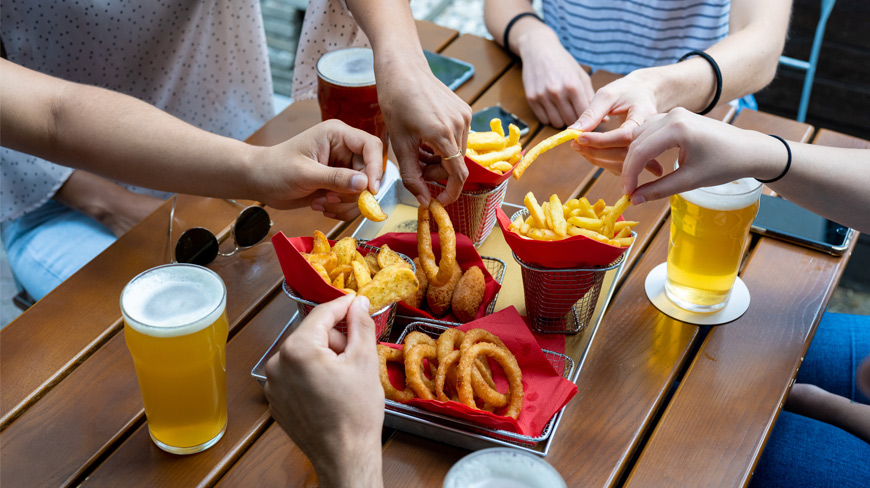
Fried foods are high in fat and take longer to digest. This can worsen cramps, bloating, and urgent bowel movements.
IBS-friendly alternative: Choose baked, grilled, or air-fried foods instead. Lean proteins like chicken, fish, or turkey are often easier on digestion.
Beans and Legumes
Beans and legumes are healthy, but they can cause gas and bloating because they ferment in the gut.
IBS-friendly alternative: Small portions may be tolerated. You can also try lentils or canned beans (rinsed well), which are easier for some people with IBS to digest.
Caffeine
Caffeine speeds up bowel movement. This can trigger diarrhea and stomach pain in people with IBS.
IBS-friendly alternative: Switch to decaf coffee, herbal tea, or water. Peppermint tea may help calm the digestive system.
Chocolate
Chocolate contains caffeine and sugar, both of which can trigger IBS symptoms for some people.
IBS-friendly alternative: Try small amounts of dark chocolate or caffeine-free treats. Then, see how your body responds before eating bigger portions.
Alcohol
Alcohol can irritate the digestive tract and affect how food moves through the gut. Beer may be especially problematic because it often contains gluten.
IBS-friendly alternative: If alcohol is tolerated, limit intake and choose small amounts.
Many people feel better avoiding alcohol during IBS flare-ups.
Garlic and Onions
Garlic and onions are high in compounds that cause gas and bloating. They are common IBS triggers.
IBS-friendly alternative: Use garlic-infused oil or onion-free seasoning blends. These can add flavor without the digestive discomfort.
Broccoli and Cauliflower
These vegetables are hard to digest and are known for causing gas, which can worsen bloating and pain.
IBS-friendly alternative: Try zucchini, carrots, spinach, or green beans. These are often easier on the digestive system.
What Foods Trigger IBS? Get Help Identifying Your Triggers
Figuring out what foods trigger IBS can be confusing and stressful. You may feel like symptoms come and go without warning, even when you try to eat carefully. Many people feel frustrated after guessing which foods are safe.
Working with a digestive health specialist can help take the guesswork out of managing IBS. Keeping a simple food and symptom journal may also help you notice patterns and avoid foods that cause flare-ups.
Contact Gastroenterology Consultants of San Antonio at 210-614-1234 for expert IBS care in San Antonio. Our team can help you identify trigger foods, manage symptoms, and create a plan that fits your lifestyle.
Request Appointment
Related: