
If you have not registered for our patient portal, please select the Register button to create your account.
The Patient Portal messages are only monitored during regular business hours. Please allow 24-72 hours to be contacted by a staff member.

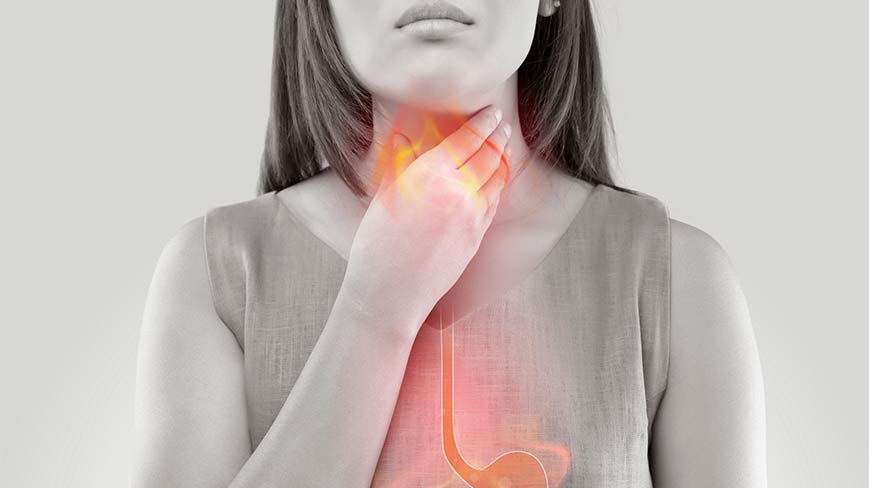
Do you have heartburn? Do you have more than two episodes a week? Has your heartburn been recurring for more than five years? You might have Barrett’s esophagus.
Barrett’s esophagus is a change in the lining of the esophagus. This is caused by chronic acid reflux.
Acid reflux occurs when the lower esophageal sphincter (LES) relaxes. The LES is the muscle in between the stomach and the esophagus. This allows for stomach juices to flow back into the esophagus. When functioning normally, the LES opens during eating to let food pass from the esophagus to the stomach and closes to prevent backflow.
Acid reflux irritates the esophageal lining, causing it to change and become similar to the lining of the stomach and intestines.
Here are the three symptoms of Barrett’s esophagus that you need to know.
A burning sensation after eating is heartburn. If heartburn occurs two or more times a week, it’s considered gastroesophageal reflux disease (GERD). Along with heartburn or GERD, it’s typical for those with Barrett’s esophagus to experience regurgitation of stomach contents.
Dysphagia, or difficulty swallowing, is a common side effect of gastrointestinal disorders. Dysphagia in those with Barrett’s esophagus happens when acid reflux creates scar tissue, which narrows the esophagus, and often occurs when other symptoms peak.
Though rarer than heartburn or dysphagia, some people with Barrett’s esophagus experience chest pain.
Your gastroenterologist may decide to evaluate you for Barrett’s esophagus based on your risk factors and health history.
Treatment depends on the patient’s health and the extent of dysplasia, or the presence of abnormal cells in the esophagus. The goal of treatment is to stop new damage to the esophagus, which mostly means eliminating acid reflux.
There are lifestyle changes that can ease acid reflux. Changing diet, smoking cessation, wearing loose-fitting clothes, and more are all at-home remedies. Those who experience worse heartburn at night may find relief by raising their head or sleeping on their left side. In addition, a doctor may prescribe a medication called a proton pump inhibitor (PPI) that reduces the amount of acid in the stomach.
Complications of Barrett’s Esophagus
The abnormal esophageal lining that is the trademark of Barrett’s esophagus can develop early precancerous changes. These changes may progress and become advanced precancerous changes and esophageal cancer. If untreated, the cancer can spread to surrounding tissues.
Developing cancer from Barrett’s esophagus is rare. Studies found that less than one percent of patients develop esophageal cancer each year. The studies also found that patients with Barrett’s esophagus live as long as people without the condition, and patients often die from unrelated causes before Barrett’s esophagus becomes cancer.
For most, gastroenterologists recommend active surveillance with periodic screening endoscopies to look for cancer. Each gastroenterologist works with each patient to determine the best level of surveillance based on the patient’s unique case.
If you are experiencing any of the symptoms of Barrett’s esophagus, schedule an appointment today.
If you have not registered for our patient portal, please select the Register button to create your account.
The Patient Portal messages are only monitored during regular business hours. Please allow 24-72 hours to be contacted by a staff member.
To pay a procedure statement from one of our surgery centers, choose your center below. For a clinic or physician statement, please follow the instructions printed on your statement, or call us at 210-614-1234.

Gastroenterology Consultants of San Antonio (GCSA) is a Professional Association owned by the physicians that practice within it. GCSA’s physicians are directly involved in the management of patient services. GCSA physicians have indirect ownership interest in our Histology/Pathology, Anesthesia, Infusion and Ambulatory Surgical Centers (ASC).