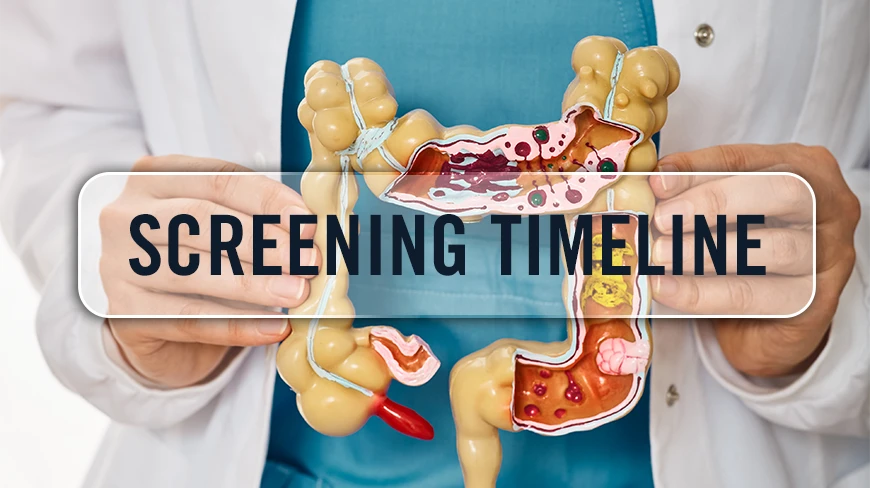
Colon Cancer Screening Timeline: When to Test and What to Expect
Colon Cancer Awareness Month is an important reminder that colorectal cancer is one of the most preventable and treatable cancers when it’s detected early. Screening plays a critical role in saving lives by identifying precancerous polyps or cancer before symptoms appear. In fact, many people with early-stage colon cancer feel completely healthy, which is why routine testing is so important.
Current medical guidelines recommend that adults at average risk begin colorectal cancer screening at age 45. With several screening options available, understanding your colon cancer screening timeline, including which test to choose and how often to repeat it, can feel overwhelming. Here at Gastroenterology Consultants of San Antonio, we believe in giving patient education so you can make the best choice. Learning about the different colon cancer tests empowers you to take charge of your health and choose the option that best fits your lifestyle and risk level.
Who Needs Screening and When to Start
Colon cancer screening recommendations depend largely on your personal risk level.
Average-risk individuals are people with:
- No personal history of colorectal cancer or polyps
- No family history of colorectal cancer
- No inherited genetic syndromes (such as Lynch syndrome)
- No history of inflammatory bowel disease (Crohn’s disease or ulcerative colitis)
For adults at average risk, most professional organizations now recommend starting routine screening at age 45. This change reflects rising colorectal cancer rates in younger adults and the proven benefit of earlier detection.
For adults ages 76 to 85, screening decisions are individualized. Factors such as overall health, life expectancy, and previous screening history help determine whether continued testing is beneficial.
People at high risk, including those with a family history of colon cancer or certain medical conditions, may need to start screening earlier and follow a customized schedule determined by a healthcare provider.
Overview of Screening Options
Colon cancer screening tests fall into two main categories:
- Stool-based tests – Non-invasive, at-home tests that look for signs of cancer in stool
- Visual (structural) exams – In-office or outpatient procedures that allow doctors to directly examine the colon
There is no single “best” test for everyone. The best screening test is the one you are willing and able to complete on schedule. Consistency matters just as much as test type when it comes to early detection.
Colonoscopy
A colonoscopy is a procedure in which a doctor uses a thin, flexible tube with a camera to examine the entire colon and rectum. It is often considered the gold standard among colon cancer tests.
One major advantage of colonoscopy is that it allows doctors to both detect and remove polyps in the same visit, preventing cancer from developing. It also provides the most thorough visual examination of the colon.
Recommended frequency:
- Every 10 years for average-risk individuals if no abnormalities are found
If polyps are detected, follow-up colonoscopies may be needed sooner. People at higher risk may also require more frequent screening.
CT Colonography (Virtual Colonoscopy)
CT colonography, sometimes called a virtual colonoscopy, uses specialized imaging to create detailed pictures of the colon.
Screening timeline:
- Every 5 years for average-risk adults
This test is less invasive than a traditional colonoscopy and does not require sedation, but it still involves bowel preparation. If suspicious areas are found, a follow-up colonoscopy is necessary to remove polyps or confirm findings.
Flexible Sigmoidoscopy
A flexible sigmoidoscopy examines only the lower portion of the colon and rectum.
Recommended timeline:
- Every 5 years, sometimes combined with yearly stool-based tests
This test may be recommended based on availability, patient preference, or specific risk factors. However, because it does not examine the entire colon, it may miss abnormalities higher up.
Stool-Based Tests (FIT, FOBT, Stool DNA)
Stool-based tests provide a non-invasive, at-home option for colorectal cancer screening and are often chosen for their convenience and accessibility. These tests work by analyzing stool samples for signs of cancer or advanced polyps and must be completed on a regular schedule to remain effective.
The Fecal Immunochemical Test (FIT) and Fecal Occult Blood Test (FOBT) both detect hidden blood in the stool, which can be an early indicator of colorectal cancer. Because bleeding may occur intermittently, these tests are recommended annually to improve early detection. Another option is the stool DNA test, such as Cologuard, which looks for both blood and abnormal DNA markers linked to cancer. Stool DNA testing is typically recommended every one to three years, depending on individual risk and provider guidance.
Comparing Test Timelines at a Glance
Here is a simplified overview of the colon cancer screening timeline:
- Colonoscopy: every 10 years
- CT colonography: every 5 years
- Flexible sigmoidoscopy: every 5 years
- FIT or FOBT: yearly
- Stool DNA test: every 1–3 years
Your healthcare provider may adjust these timelines based on your medical history and risk factors.
What to Expect When Scheduling
Before visual exams such as colonoscopy or CT colonography, bowel preparation is required to ensure clear results.
When scheduling your screening, talk openly with your healthcare provider about your preferences, concerns, and schedule. Many insurance plans cover recommended colorectal cancer screening tests, especially when performed at guideline-recommended ages.
Understanding your screening options and following the recommended colon cancer screening timeline can make a life-saving difference. During Colon Cancer Awareness Month, take the opportunity to prioritize your health by scheduling or staying up to date with appropriate colon cancer tests.
Regular screening detects cancer early—and often prevents it entirely—dramatically improving survival rates. The most important step is taking action and committing to the screening schedule that’s right for you. If you would like to start your screening schedule with Gastroenterology Consultants of San Antonio, feel free to contact us or call 210-614-1234.
Request Appointment